A Note on History and Place
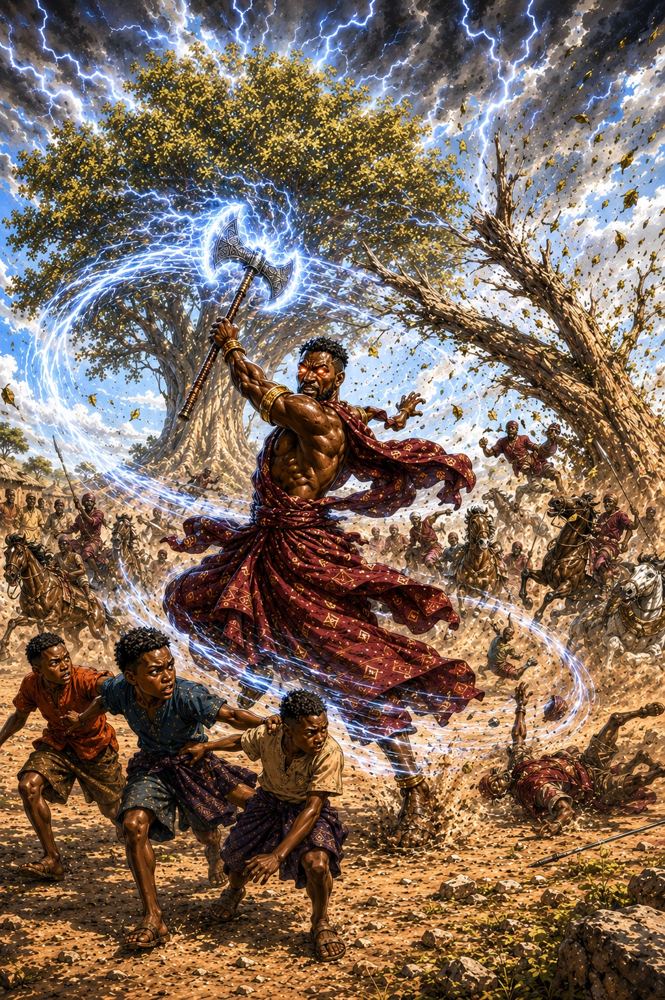
Bodisha is fictional. The world surrounding it is not. This story is set in the early nineteenth century in the territory of the Old Oyo Empire, one of the most significant political and cultural powers in the history of West Africa. At its height, Old Oyo, with its capital at Oyo-Ile, controlled a vast network of trade routes, city-states, and vassal territories stretching from the Niger River to the coast. The Alaafin held authority over dozens of communities, each with their own local governance, their own traditions, and their own relationship to the empire's power.
Sango's axe, his colors, his sacred days — all depicted here — draw from living religious practice.
Yoruba civilization in this period was sophisticated, urban, and rich with spiritual life. The Orisha were carried across the Atlantic during the era of the slave trade, where they took root in the Americas and survive to this day in Candomblé, Santería, and other Afro-Caribbean and Afro-Brazilian practices. Sango, the Orisha of thunder, lightning, and justice, is treated in this story with the care and respect his tradition deserves.
The political world the story moves through — the compact of trade routes, the authority of local kings, the relationship between village and empire — reflects the genuine structures of Oyo governance. When riders arrive in Bodisha, when a letter is sent between chiefs, when the King consults his advisers about what is happening in the north: these are not invented scenarios. They are the fabric of how power, communication, and loyalty actually functioned in this world.
What is invented is the small and human scale: the three boys on the field, their families' disputes, the women at the market stall, the old god on his bench.
A Note on Tradition
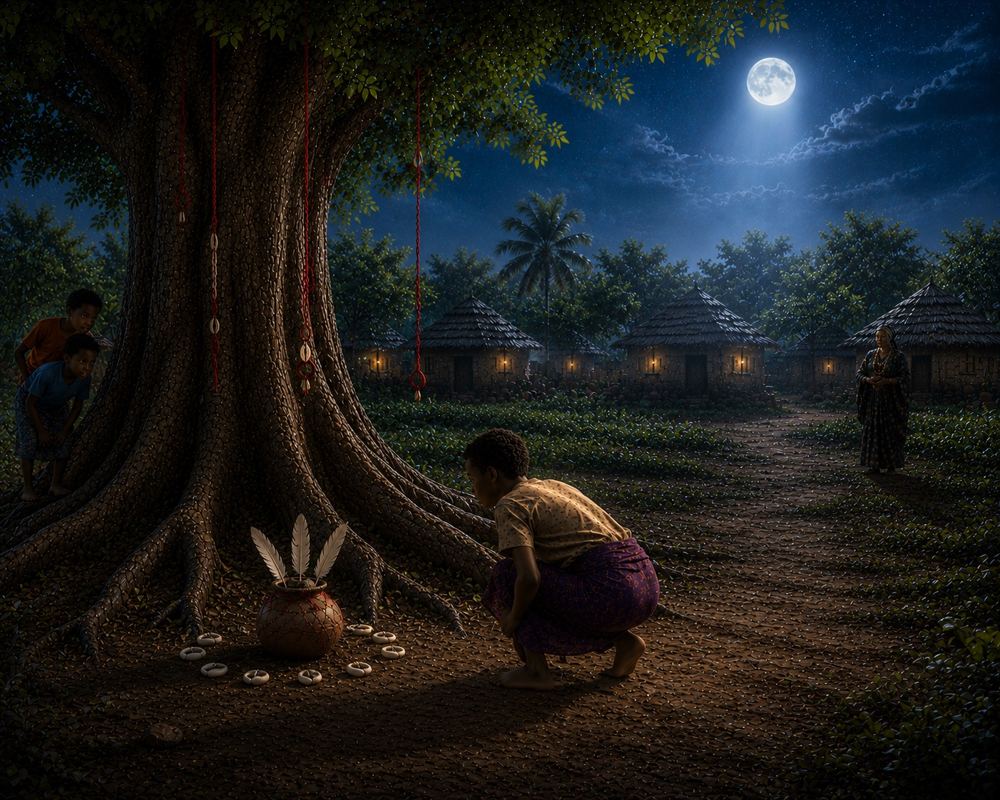
The Orisha, the ceremonies, the sacred spaces are drawn from Yoruba religious and cultural heritage that predates the arrival of Christianity and Islam in West Africa by centuries. Today, many Nigerians and members of the Yoruba diaspora practice Christianity or Islam as their primary faith, and some regard the traditions depicted here with suspicion or discomfort. To engage with this book asks only for curiosity: the same curiosity we bring to ancient Greek mythology, to Norse legend, to the stories of any civilization navigating a world larger than itself. These stories celebrate the Yoruba heritage, and it belongs to anyone willing to receive them, whatever else they also carry.
To know where you come from is not a threat to where you are.